
Your 2026 Roadmap Isn’t Answering
📅 26 January 2026 | 📂 In-Destination Revenue

You’re Winning the Booking War But Losing the Revenue Battle
Over 60% of travel budgets now flow to in-destination experiences and yet most operators capture less than 20% of that spend. I bet even 20% is me being generous. We’ve become masters at filling seats and beds while leaving a $3 trillion ancillary revenue opportunity on the table.
The gap between booking and arrival isn’t just a planning phase. It’s where profit goes to die when the in-destination channel is a silent revenue leak.
Here’s the uncomfortable truth: 80% of travel operators still rely on manual processes and legacy systems built for a different era. By manual processes, I mean excel, email and WhatApp’s. While we’ve digitized booking flows, the actual journey remains stubbornly analog. Static PDFs with generic recommendations, or one-size-fits-all itineraries that ignore how a solo business traveler in Tokyo differs from a family exploring Rome.
We know with the same certainty that the sun will rise tomorrow, or that someone will comment on this article and mention AI Agents, that travelers aren’t asking for better brochures. They’re demanding authenticity, sustainability, and local experiences that feel personally curated.
They’re comparison-shopping in real-time, reading reviews while standing on street corners, and booking directly with suppliers we could have bundled if our systems allowed it. Every recommendation gap represents a monetization moment we’re missing. Every generic suggestion is a chance for competitors to insert themselves between us and our customers.
The transformation isn’t about adding more options, it’s about delivering the right experience at the right emotional moment. True personalization requires understanding traveler personas in context: the adrenaline-seeker versus the culture-immersed, the stressed executive needing decompression versus the family seeking connection.
AI-powered platforms now make this possible without rebuilding your entire stack. API-first architecture integrates with existing systems, pulling fragmented supplier data into intelligent recommendation engines that scale personalization across thousands of travelers simultaneously. What previously required armies of trip planners now happens automatically, driven by algorithms that learn individual preferences while understanding universal human needs.
Your competitors are making their technology decisions right now. The operators who embed emotion-driven, AI-powered recommendations into their 2026 offerings will own the in-destination revenue stream. Those who wait will spend the next three years watching market share erode.
So, ask yourself some uncomfortable question:
- What’s your current ancillary capture rate?
- Can your systems dynamically adjust recommendations based on real-time context?
- Are you positioned to monetize the experience economy, or are you still optimizing the booking economy?
The future of travel isn’t about better itineraries. It’s about experience maps that understand the human behind the reservation. It’s about platforms intelligent enough to bridge the gap between what travelers want and what operators can profitably deliver.
The question isn’t whether AI will transform in-destination revenue. The question is whether you’ll lead that transformation or explain to your board why you didn’t.
Your Trip Planner Is Lying. Here’s Why.
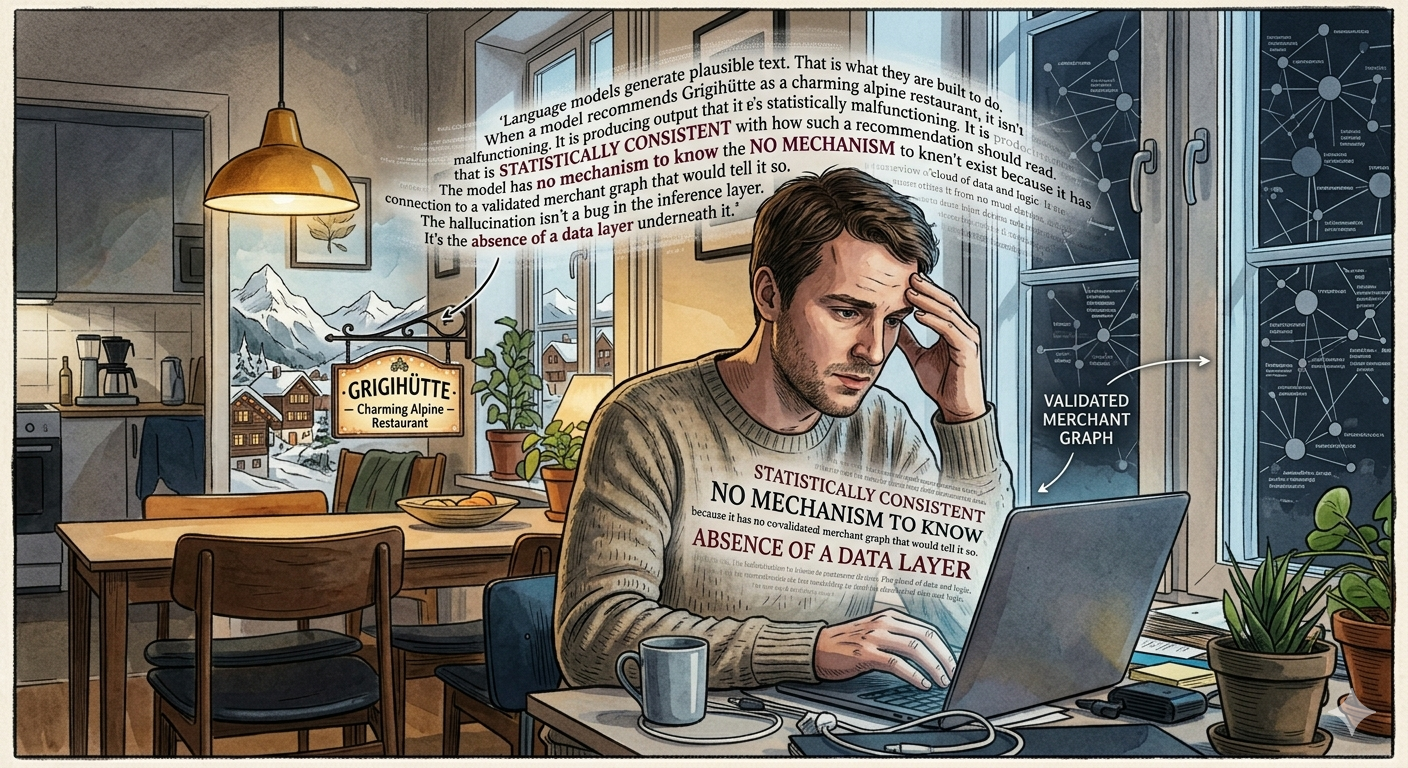
A credible study just handed your AI roadmap a liability. In testing published by Forbes and InsureMyTrip, AI-powered travel planning tools recommended restaurants, attractions, and experiences that simply do not exist. Not outdated listings. Not temporary closures. Fabrications, complete with…

You Win the Booking. You Lose the Journey.
Forty-four percent of in-destination activities are booked outside the platform that originated the trip. Not because travelers are disloyal. Because the platform gave them no reason to stay. The Funnel You Built Isn’t Broken — It’s Just Incomplete The OTA…

The Platform Era in Travel:
Why Connectivity Determines Competitive Advantage
Enterprise OTAs and DMCs are losing between $8-15M annually to a problem hiding in plain sight: 44% of spontaneous in-destination bookings happen outside their platforms. While your systems capture the initial flight and hotel reservation, travelers are booking experiences through…